
Your Professional Viscosity Index Improver Supplier
Since its establishment in 2010, Sinolook has been deeply involved in the energy and chemical sectors and has become one of the leading base oil and petrochemical traders in China and Asia. In the niche field of fine chemicals, we have a deep understanding of the characteristics and application scenarios of each type of product.
-
![PMA Viscosity Modifier]() PMA Viscosity ModifierPMA Viscosity Index Improver, with the CAS number 25133-85-1, is a premium polymer-based additive widely recognized for its exceptional viscosity-temperature performance and shear stability in
PMA Viscosity ModifierPMA Viscosity Index Improver, with the CAS number 25133-85-1, is a premium polymer-based additive widely recognized for its exceptional viscosity-temperature performance and shear stability in -
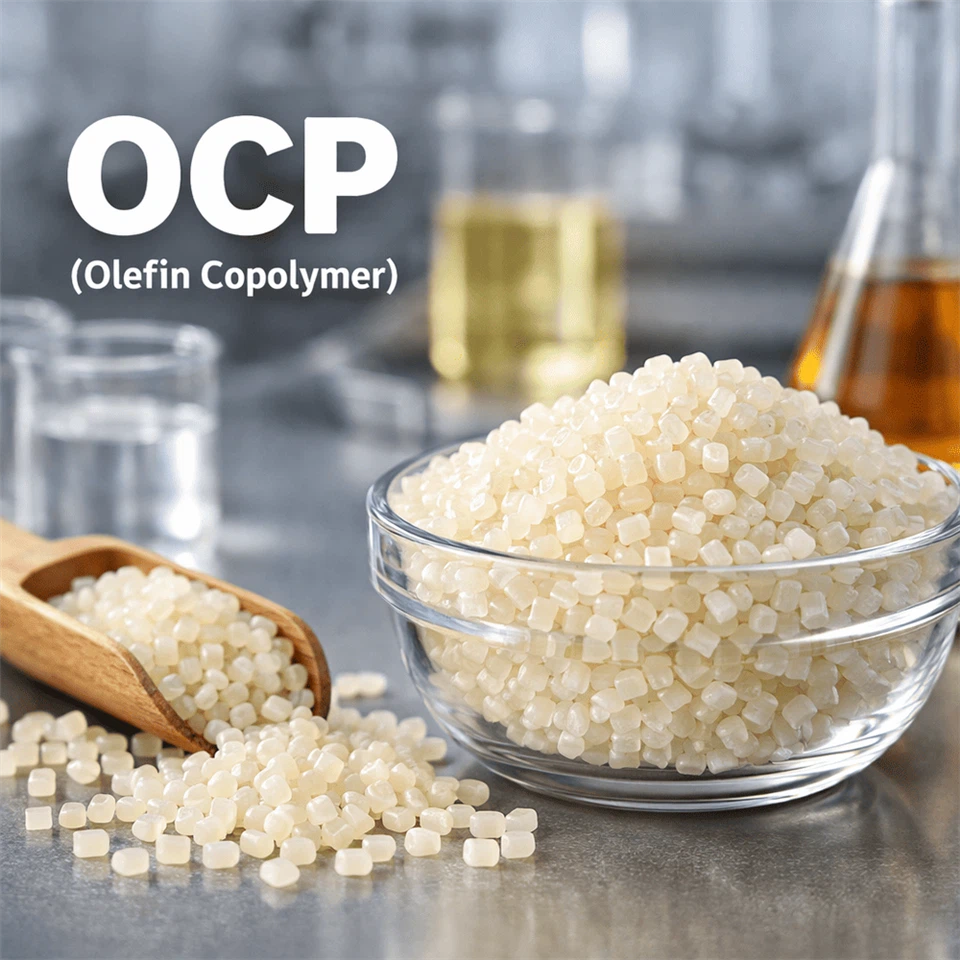
![OCP Olefin Copolymer (CAS 9010-79-1) – Viscosity Index Improver Additive | China Manufacturer & Bulk Supplier]() OCP Olefin Copolymer (CAS 9010-79-1) – Viscosity Index Im...OCP Olefin Copolymer (CAS 9010-79-1) is a high-performance, polymer-based viscosity index improver (VII) synthesized from ethylene and propylene monomers. Renowned for its industry-leading shear
OCP Olefin Copolymer (CAS 9010-79-1) – Viscosity Index Im...OCP Olefin Copolymer (CAS 9010-79-1) is a high-performance, polymer-based viscosity index improver (VII) synthesized from ethylene and propylene monomers. Renowned for its industry-leading shear -
![HS (Hydrogenated Styrenic) VII (CAS 66070-97-5) – Premium Shear-Stable Viscosity Modifier | China Manufacturer & Bulk Supplier]() HS (Hydrogenated Styrenic) VII (CAS 66070-97-5) – Premium...HS (Hydrogenated Styrenic) VII (CAS 66070-97-5) is a high-end, polymer-based viscosity index improver produced by hydrogenating styrene-diene block copolymers to ≥98% saturation. With an
HS (Hydrogenated Styrenic) VII (CAS 66070-97-5) – Premium...HS (Hydrogenated Styrenic) VII (CAS 66070-97-5) is a high-end, polymer-based viscosity index improver produced by hydrogenating styrene-diene block copolymers to ≥98% saturation. With an


Why Choose Us
Reliable Global Logistics
We integrate international logistics resources to build a cross-border supply chain network covering major ports, and can provide flexible logistics solutions such as door-to-door, multimodal transportation, warehousing and distribution according to customer needs to ensure that goods arrive safely and on time to global destinations.
Integrated solution
We are committed to providing global customers with accurate, efficient and reliable integrated solutions for fine chemical procurement and logistics.
Fast Response & Professional Support
Our experienced sales and logistics teams provide responsive communication, technical assistance, and efficient service support throughout every stage of cooperation.
Strict Quality Control
We Comprehensive supplier evaluation and quality inspection procedures ensure product consistency, compliance, and reliable performance throughout the supply chain.
What is Viscosity Index Improver
A Viscosity Index Improver (VII) is a polymer additive used in lubricants to prevent the oil from becoming too thin at high temperatures. It ensures the oil flows easily during cold starts but maintains a thick, protective lubricating film when the engine or machine is running hot.
Specification
|
Parameter |
Standard Value |
Significance |
|
Appearance |
Pale yellow to transparent viscous liquid |
Free of visible impurities or sediment |
|
Molecular Weight |
50,000 – 500,000 g/mol |
Adjustable to match thickening requirements |
|
Viscosity at 100°C |
100 – 2,000 mm²/s |
Determines thickening efficiency in base oil |
|
Shear Stability Index (SSI) |
≤ 25% (ND-type) / ≤ 30% (D-type) |
Key indicator of viscosity retention under shear |
|
Pour Point |
≤ -20°C |
Good low-temperature fluidity for easy blending |
|
Flash Point (COC) |
≥ 180°C |
Critical safety parameter for storage & transport |
|
Volatility (Noack, 250°C/1h) |
≤ 15% |
Minimizes oil consumption at high temperatures |
|
Shelf Life |
24 months (sealed, cool & dry storage) |
Stable long-term quality assurance |
Types of Viscosity Index Improver
Diverse Chemistry for Broad Applications: VIIs come in various chemical compositions, including Polyisobutylene (PIB), Polymethyl Methacrylate (PMMA), Polydimethylsiloxane (PDMS), and Styrene-Ethylene-Butylene-Styrene (SEBS), among others. Each type is tailored for specific lubrication needs, offering a spectrum of temperature performance and compatibility.
Shear Stability
Shear Stability is the ability of a polymer to resist shear stress, which is a crucial performance of viscosity index improvers. When a viscosity index improver has poor shear stability, the main chain of the polymer will break under the action of shear stress, leading to a drop in viscosity.
Thickening Ability
Thickening Ability is a very important performance of viscosity index improver. The greater the thickening ability of the viscosity index improver, the smaller the dosage, and the lower the cost of the multigrade Lubricant.
Thermal/Oxidative Stability
Thermal/Oxidative Stability is another important evaluation index of VIIs. Viscosity index improvers are subject to high-temperature oxidation and thermo-oxidative decomposition in actual use, and the decomposition will lead to a series of problems such as viscosity decrease, acid value increase, and ring groove carbon deposit increase.
Low-Temperature Performance
The low-temperature viscosity of motor oils is a crucial rheological characteristic. To enable the vehicle to start in cold weather, the viscosity of the motor oils in the bearings must be below a critical value.
High temperature, high shear rate (HTHS)
High-Temperature High Shear (HTHS) is an indicator of the viscosity stability of engine oil under high temperature and high shear, which reflects the ability of engine oil to maintain lubrication under high temperature and high shear conditions.

At Low Temperatures (Cold Start)
Before VIIs:
When the engine is cold, the oil can be thick and sluggish (high viscosity), making it harder for the oil to circulate quickly through the engine. This can lead to friction, wear, and sluggish engine performance.
With VIIs:
The polymers in the VIIs remain contracted at low temperatures, meaning the oil flows easily like water. The oil is thin enough to circulate quickly and provide the needed lubrication to engine parts.
As the Engine Heats Up (Normal Operating Temperature)
Before VIIs:
As the engine temperature increases, the oil becomes thinner, losing its ability to protect engine parts. The oil’s viscosity decreases significantly as it gets hotter, making it less effective at forming a lubricating film between moving parts.
With VIIs:
The polymers in the Viscosity Index Improver expand as the temperature rises. They increase the oil’s thickness to maintain the proper viscosity, keeping the oil effective at lubrication and preventing it from thinning out too much.
At low temperatures, these coils are tightly compressed, allowing the oil to flow easily.
As the oil heats up, the coils “stretch out” and increase the oil’s thickness, helping the oil maintain its viscosity and provide effective lubrication even at high temperatures.
Applications of Viscosity Index Improver
Engine Oils
Our VI improvers guarantee that engine oils do not lose their viscosity over a wide temperature span, enhancing engine protection and performance.
Hydraulic Oils
The products of CHEMPOL have the ideal balance between shear stability and low-temperature fluidity of hydraulic oils that increases their stability under harsh conditions.
Gear Oils
Gear oils take advantage of our VI improvers in terms of their thickening efficiency and shear stability, and can be used in high-pressure operating conditions without difficulty.
Industrial Lubricants
In the case of industrial machines, our viscosity index enhancers keep lubrication stable and effective, which decreases downtime and increases the quality of equipment life.
FAQ
As one of the most professional viscosity index improver manufacturers and suppliers in China, we're featured by quality products and good service. Please rest assured to buy high-grade viscosity index improver made in China here from our factory. For price consultation, contact us.