
Your Professional Chemical for Coating Supplier
Since its establishment in 2010, Sinolook has been deeply involved in the energy and chemical sectors and has become one of the leading base oil and petrochemical traders in China and Asia. In the niche field of fine chemicals, we have a deep understanding of the characteristics and application scenarios of each type of product.
-
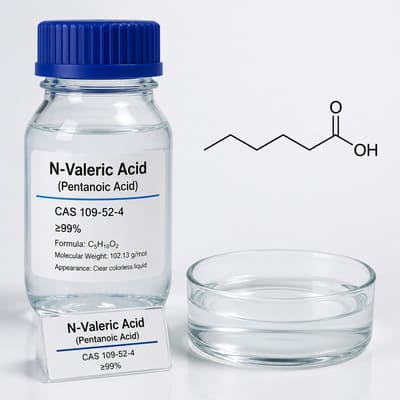
![N-Valeric Acid (Pentanoic Acid) — CAS 109-52-4, ≥99%]() N-Valeric Acid (Pentanoic Acid) — CAS 109-52-4, ≥99%Sinolook supplies n-valeric acid (pentanoic acid), CAS 109-52-4, C5H10O2, MW 102.13 — the linear C5 acid used to build polyol ester refrigeration lubricants, valerate esters and valeryl chloride.
N-Valeric Acid (Pentanoic Acid) — CAS 109-52-4, ≥99%Sinolook supplies n-valeric acid (pentanoic acid), CAS 109-52-4, C5H10O2, MW 102.13 — the linear C5 acid used to build polyol ester refrigeration lubricants, valerate esters and valeryl chloride. -
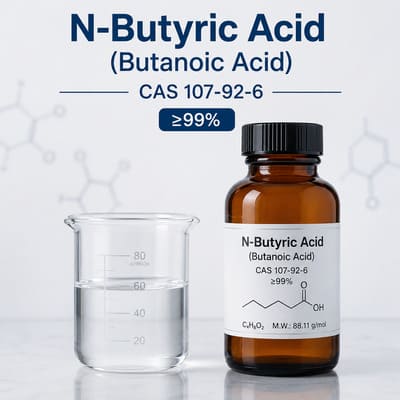
![N-Butyric Acid (Butanoic Acid) — CAS 107-92-6, ≥99%]() N-Butyric Acid (Butanoic Acid) — CAS 107-92-6, ≥99%Sinolook supplies n-butyric acid (butanoic acid), CAS 107-92-6, C4H8O2, MW 88.11 — the C4 straight-chain acid behind tributyrin, sodium and calcium butyrate, butyrate esters, butyric anhydride and
N-Butyric Acid (Butanoic Acid) — CAS 107-92-6, ≥99%Sinolook supplies n-butyric acid (butanoic acid), CAS 107-92-6, C4H8O2, MW 88.11 — the C4 straight-chain acid behind tributyrin, sodium and calcium butyrate, butyrate esters, butyric anhydride and -
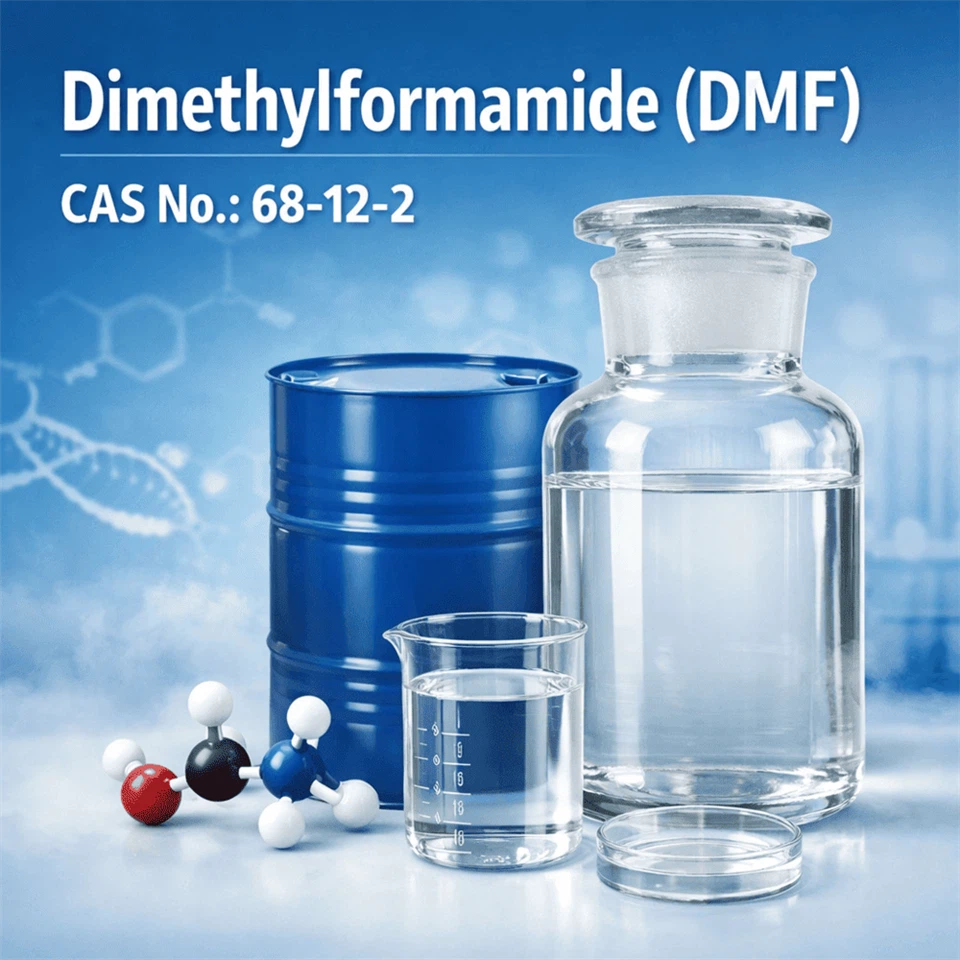
![Dimethylformamide (DMF)]() Dimethylformamide (DMF)Dimethylformamide (DMF, CAS 68-12-2) is a high-purity polar aprotic solvent with purity ≥99.9%, widely used in synthetic fiber spinning, pharmaceutical API synthesis, agrochemical production,
Dimethylformamide (DMF)Dimethylformamide (DMF, CAS 68-12-2) is a high-purity polar aprotic solvent with purity ≥99.9%, widely used in synthetic fiber spinning, pharmaceutical API synthesis, agrochemical production, -
![Alpha-Methylstyrene]() Alpha-Methylstyreneα-Methylstyrene (AMS, CAS 98-83-9) is a reactive vinyl aromatic monomer and non-HAP styrene alternative, produced as a co-product of cumene oxidation. With purity ≥99.5%, AMS is the global standard
Alpha-Methylstyreneα-Methylstyrene (AMS, CAS 98-83-9) is a reactive vinyl aromatic monomer and non-HAP styrene alternative, produced as a co-product of cumene oxidation. With purity ≥99.5%, AMS is the global standard -
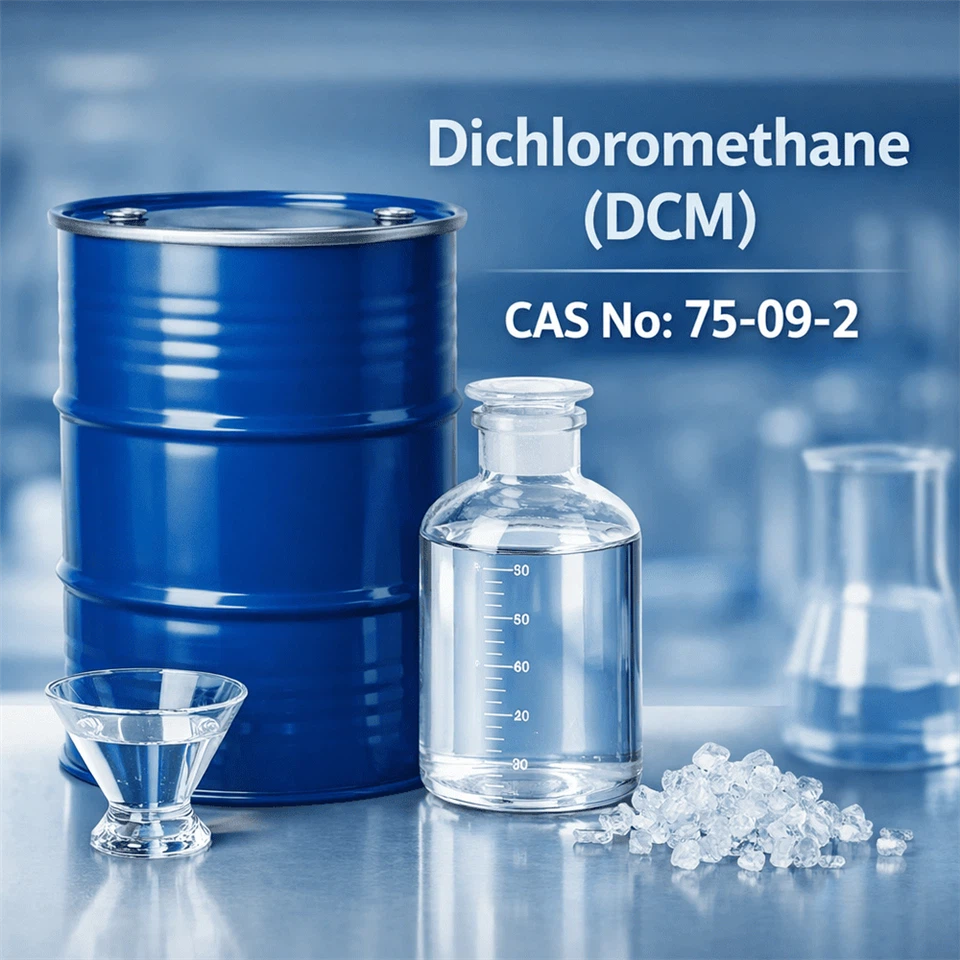
![Dichloromethane (DCM)]() Dichloromethane (DCM)Dichloromethane (DCM / Methylene Chloride, CAS 75-09-2) is a non-flammable halogenated solvent with purity ≥99.9%, valued for its exceptionally low boiling point (39.8°C), high density (1.322–1.328
Dichloromethane (DCM)Dichloromethane (DCM / Methylene Chloride, CAS 75-09-2) is a non-flammable halogenated solvent with purity ≥99.9%, valued for its exceptionally low boiling point (39.8°C), high density (1.322–1.328 -
![2-Methyl-1,3-propanediol (MP0)]() 2-Methyl-1,3-propanediol (MP0)2-Methyl-1,3-propanediol (MPD / MPO, CAS 2163-42-0) is a branched asymmetric diol (HOCH₂–CH(CH₃)–CH₂OH, MW 90.12) with purity ≥99.5%. Its methyl-branched structure produces amorphous, flexible
2-Methyl-1,3-propanediol (MP0)2-Methyl-1,3-propanediol (MPD / MPO, CAS 2163-42-0) is a branched asymmetric diol (HOCH₂–CH(CH₃)–CH₂OH, MW 90.12) with purity ≥99.5%. Its methyl-branched structure produces amorphous, flexible -
![Isooctanoic Acid]() Isooctanoic Acid2-Ethylhexanoic Acid (2-EHA / Isooctanoic Acid, CAS 149-57-5) is a branched C8 carboxylic acid (purity ≥99.0%, AV 385–392 mg KOH/g) and the global standard precursor for metal 2-ethylhexanoate
Isooctanoic Acid2-Ethylhexanoic Acid (2-EHA / Isooctanoic Acid, CAS 149-57-5) is a branched C8 carboxylic acid (purity ≥99.0%, AV 385–392 mg KOH/g) and the global standard precursor for metal 2-ethylhexanoate -
![Neodecanoic Acid]() Neodecanoic AcidNeodecanoic Acid (NDA, CAS 26896-20-8) is a quaternary neo-C10 branched carboxylic acid (purity ≥99.0%, AV 320–328 mg KOH/g) produced by Koch carbonylation of C9 olefins. Its defining feature — a
Neodecanoic AcidNeodecanoic Acid (NDA, CAS 26896-20-8) is a quaternary neo-C10 branched carboxylic acid (purity ≥99.0%, AV 320–328 mg KOH/g) produced by Koch carbonylation of C9 olefins. Its defining feature — a


Why Choose Us
Reliable Global Logistics
We integrate international logistics resources to build a cross-border supply chain network covering major ports, and can provide flexible logistics solutions such as door-to-door, multimodal transportation, warehousing and distribution according to customer needs to ensure that goods arrive safely and on time to global destinations.
Integrated solution
We are committed to providing global customers with accurate, efficient and reliable integrated solutions for fine chemical procurement and logistics.
Fast Response & Professional Support
Our experienced sales and logistics teams provide responsive communication, technical assistance, and efficient service support throughout every stage of cooperation.
Strict Quality Control
We Comprehensive supplier evaluation and quality inspection procedures ensure product consistency, compliance, and reliable performance throughout the supply chain.
What is Isooctanoic Acid
Isooctanoic acid is a branched-chain saturated carboxylic acid (chemical formula C 8H 16O 2)). Most commonly known as 2-ethylhexanoic acid, this versatile, colorless liquid serves as a vital chemical intermediate for manufacturing industrial esters, metal soaps, plasticizers, and pharmaceuticals.
What is Dichloromethane
Dichloromethane (DCM), also known as methylene chloride, is a clear, volatile, and non-flammable organic liquid with a sweet, chloroform-like odor. With the chemical formula 𝐶𝐻2𝐶𝑙2, it is primarily used as an industrial and laboratory solvent due to its unique ability to dissolve a wide range of organic compounds.
Specification
|
Parameter |
Specification / Value |
|
Product Name |
2-Ethylhexanoic Acid (2-EHA / Isooctanoic Acid / 2-Ethyl Hexanoic Acid / Octoic Acid) |
|
CAS Number |
149-57-5 |
|
EC Number |
205-743-6 |
|
Molecular Formula |
C₈H₁₆O₂ |
|
Molecular Weight |
144.21 g/mol |
|
Structure |
CH₃(CH₂)₃CH(C₂H₅)COOH - 2-ethyl-substituted hexanoic acid |
|
Appearance |
Colorless to Pale Yellow Transparent Liquid |
|
Purity |
≥99.0% |
|
Acid Value |
385–392 mg KOH/g (theoretical 389 mg KOH/g for 100% 2-EHA - use COA value for octoate stoichiometry) |
|
Color (Pt-Co) |
≤50 |
|
Density (d20) |
0.902–0.906 g/cm³ |
|
Boiling Point |
228–230°C (760 mmHg) |
|
Flash Point |
~116°C (closed cup) - Combustible Liquid (Class III-B) |
|
Refractive Index |
~1.424–1.426 (n20/D) |
|
Viscosity (20°C) |
~6–8 mPa·s |
|
Water Solubility |
~0.1 g/L at 20°C (very slightly soluble); fully miscible with most organic solvents and oils |
|
PKa |
~4.8 (weak carboxylic acid) |
|
EU CLP Classification |
Repr. 1B (H360D) - Reproductive Toxicant Category 1B |
|
US HAP Status |
HAP-listed - Clean Air Act Section 112(b) |
|
REACH SVHC |
Candidate List - verify current status via ECHA before EU procurement |
|
TSCA Inventory |
Listed |
|
Packing |
180 KG / Steel Drum; IBC Tank (1,000 KG) |
|
Storage |
5–30°C; sealed metal or HDPE drums; ventilated; away from bases; 12-month shelf life |
|
Parameter |
Specification / Value |
|
Product Name |
Dichloromethane (DCM / Methylene Chloride / Methylene Dichloride / CH₂Cl₂) |
|
CAS Number |
75-09-2 |
|
EC Number |
200-838-9 |
|
Molecular Formula |
CH₂Cl₂ |
|
Molecular Weight |
84.93 g/mol |
|
Appearance |
Colorless Transparent Liquid with characteristic mild sweet odour |
|
Purity |
≥99.9% |
|
Water Content |
≤0.01% (Karl Fischer - tighter than most solvents; DCM forms azeotrope with water) |
|
Acidity (as HCl) |
≤0.0005% - monitors HCl from thermal/oxidative degradation |
|
Color (Pt-Co) |
≤10 |
|
Density (d20) |
1.322–1.328 g/cm³ (denser than water - organic layer settles below aqueous) |
|
Boiling Point |
39.8°C (760 mmHg) - extremely volatile; lowest bp of common industrial solvents |
|
Flash Point |
None - Non-Flammable Liquid (GHS not classified as flammable) |
|
Vapour Pressure |
47 kPa at 20°C - extremely high; rapid evaporation; hazard in enclosed spaces |
|
Refractive Index |
1.421–1.425 (n20/D) |
|
Viscosity (20°C) |
0.413 mPa·s (very low viscosity) |
|
Water Solubility |
13 g/L at 20°C (partially soluble; forms azeotrope at ~1.5% water / 38.1°C) |
|
EU CLP Classification |
Carc. 2 (H351); Skin Irrit. 2; STOT SE 3 |
|
EU OEL (TWA / STEL) |
353 mg/m³ (100 ppm) TWA / 706 mg/m³ (200 ppm) STEL - Dir. 2019/983/EU; stricter national OELs apply |
|
US HAP Status |
HAP-listed - Section 112(b) Clean Air Act |
|
US TSCA Section 6 |
Paint stripper use prohibited (consumer); industrial use requires Worker Protection Program |
|
ICH Q3C Status |
Class 2 - PDE 6.0 mg/day; concentration limit 600 ppm in drug product |
|
REACH Annex XIV |
Not listed (Annex XVII Entry 71 paint stripper restriction applies) |
|
Packing |
250 KG / Iron Drum; IBC Tank (1,000 KG) |
|
Storage |
0–25°C; sealed metal or HDPE drums; dark, force-ventilated at floor level; 12-month shelf life |
Sustainable & Low-Carbon: Produced via n-butyraldehyde hydrogenation, ensuring an eco-friendly manufacturing process.
High Purity & Sulfur-Free: No sulfur byproducts, making it ideal for high-performance industrial applications.
Enhanced Hydrogenation Performance: Improves catalyst stability, reaction efficiency, and product selectivity.
Versatile Applications: Used in petrochemicals, lubricants, coatings, pharmaceuticals, and fine chemicals.
Key Properties of Dichloromethane
High Solvency Power
It readily dissolves a wide range of organic materials, including fats, oils, waxes, and many polymers.
Volatility
DCM evaporates quickly, making it ideal for applications where rapid drying is desired.
Non-flammability
Unlike some solvents, DCM is not flammable, adding a safety layer to its use in certain settings.
The traditional production process for Methylene Di Chloride (Dichloromethane) involves the following key steps:
Chlorination of Methane: The starting material is methane (CH4), which is reacted with chlorine gas (Cl2) at high temperatures.
This chlorination process produces a mixture of chlorinated methane compounds, including methylene chloride (CH2Cl2), chloroform (CHCl3), and carbon tetrachloride (CCl4).
Fractional Distillation: The mixture of chlorinated methane compounds is then separated using fractional distillation, taking advantage of the different boiling points of the individual compounds.
This distillation process allows for the isolation of the methylene chloride fraction.
Stabilization: The isolated methylene chloride is then stabilized by the addition of small amounts of stabilizing agents, such as amylene or cyclohexane. These stabilizers help prevent the decomposition of methylene chloride during storage and use.
The traditional production process for methylene dichloride has been in use for decades and remains a widely adopted method in the industry. It allows for the efficient large-scale manufacture of this versatile chlorinated solvent from readily available raw materials.
Application of Dichloromethane
Pharmaceuticals
DCM plays a crucial role in the manufacturing of various pharmaceutical products, aiding in the extraction and purification of drugs. It’s important to note that strict regulations govern its use in this industry to ensure product safety.
01
Electronics Cleaning
The electronics industry relies on DCM for cleaning delicate components due to its high solvency power and rapid evaporation, leaving no residue.
02
Food Processing
Decaffeination of coffee and tea often utilizes DCM as a selective solvent to remove caffeine without affecting the flavor profile. However, regulatory limitations and the availability of safer alternatives are pushing for a decrease in its use in this sector.
03
Aerosol Propellant
In the past, DCM was a common propellant in aerosol cans due to its non-flammable nature. However, environmental concerns and the availability of safer alternatives have led to a decline in this application.
04
Refrigerant
Prior to the discovery of more environmentally friendly options, DCM was used as a refrigerant in some applications.
05
Application of Isooctanoic Acid
Coatings & Paint Driers
Converted into metal soaps (like cobalt or zirconium salts) to function as highly effective drying agents in paints, varnishes, and printing inks, delivering a faster, high-quality finish.
Pharmaceuticals
Serves as a vital salifying reagent in solvent-based methods for synthesizing penicillin sodium salts and carboxylpenicillin.
Lubricants & Fluids
Utilized to formulate synthetic lubricants, polyol esters, and automotive coolants prized for their excellent oxidative stability, low volatility, and chemical compatibility.
Cosmetics & Personal Care
Its esters act as emollients, texture enhancers, and plasticizers in skincare, perfumes, and other cosmetic formulations.
FAQ
As one of the most professional chemical for coating manufacturers and suppliers in China, we're featured by quality products and good service. Please rest assured to buy high-grade chemical for coating made in China here from our factory. For price consultation, contact us.
1 3 propanediol ph, versatic acid, neodecanoic