
🔩 Application: Nylon (PA6 / PA66)
Brominated Polystyrene in Nylon (PA6/PA66): Glass-Fibre Flame Retardancy
The hottest processing window in engineering plastics - and the flame retardant that can take the heat. 🔥
If you open almost any electrical connector, relay base or circuit-breaker housing, there's a good chance the material is glass-reinforced polyamide - PA6 or PA66. Nylon offers a rare combination of strength, heat resistance, chemical resistance and processability that makes it ideal for these safety-critical parts. But nylon must be flame-retarded to serve there, and nylon is one of the most difficult hosts of all, because PA66 is processed hotter than nearly any other common engineering plastic. That single fact rules out many flame retardants - and it is exactly where brominated polystyrene (BPS) shines. 🔩
This article is part of our BPS knowledge base. For the overview, start with the complete guide to brominated polystyrene.
🌡️ Nylon's Defining Challenge: Heat
The two workhorse polyamides sit at different points on the temperature scale, and that difference shapes flame-retardant selection:
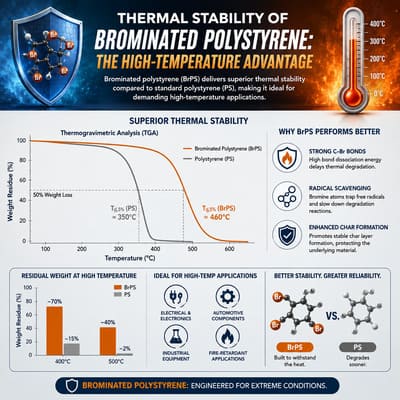
- 🔥 PA66 melts around 255–265 °C and is typically processed at roughly 280–300 °C. That is a punishing environment - a flame retardant that decomposes even slightly at those temperatures will discolour the part, corrode tooling and lose its potency.
- 🌡️ PA6 melts a little lower, around 220 °C, and is processed near 240–270 °C - still demanding, but with more headroom than PA66.
💡 Why this matters: a nylon flame retardant is judged first on thermal survival. If it can't stay intact through PA66 compounding and moulding, nothing else about it counts. BPS's headline property - heat stability - is precisely what nylon needs most.
✅ Why Brominated Polystyrene Fits Nylon
BPS lines up with nylon's requirements point for point:
✅ Survives PA66's melt. Its decomposition temperature is high enough to ride out ~300 °C processing - see the thermal stability of brominated polystyrene.
✅ Non-blooming on precision parts. Connectors have fine geometries and sealing surfaces; a blooming additive would be a defect. BPS's high molecular weight keeps it in the matrix.
✅ Strong electrical performance. It supports the comparative tracking index (CTI) and glow-wire behaviour that connector standards demand.
✅ Colour stability. Connectors are often colour-coded; BPS helps hold consistent, clean colour through hot moulding.
The gas-phase mechanism that delivers this protection is explained in how brominated polystyrene works.
🧵 The Glass-Fibre Candlewick Effect in Nylon
Most structural nylon is glass-reinforced (commonly 25–35% glass, sometimes more), because glass fibre transforms nylon's stiffness and heat-deflection temperature. But reinforcement brings the familiar candlewick effect: exposed fibres wick molten polymer and can carry a flame along the part, making UL94 V-0 harder to achieve than in unfilled nylon.
This is one reason gas-phase flame retardants are favoured for reinforced nylon. Because BPS acts in the vapour above the surface, it suppresses combustion regardless of the fibre wick. It also compares favourably with certain halogen-free nylon systems (such as metal phosphinates), which can be sensitive to processing and dosage in highly filled compounds - a trade-off explored in brominated vs halogen-free flame retardants.
🧪 Formulating Flame-Retardant Nylon
A typical BPS-based nylon package brings together:
- ⚗️ Brominated polystyrene as the primary flame retardant, selected for heat tolerance.
- 🤝 Antimony trioxide (Sb₂O₃) as synergist - ratio and dosage are covered in the antimony trioxide synergy & loading guide.
- 🧵 Glass fibre for stiffness and heat resistance.
- 💧 Anti-drip (PTFE) to control flaming drips during the UL94 test.
- 🛡️ Heat & process stabilisers appropriate to the polyamide grade.
💡 Processing tips: dry nylon properly (polyamides are hygroscopic), keep residence time short at high melt temperature to limit any thermal stress, and validate CTI/glow-wire on the final compound. For exact BPS grade specifications suited to PA66's window, see the product page.
⚖️ Honest Trade-offs
A candid look at the compromises helps you specify with eyes open:
- 🌫️ Acidic gas & smoke. As with all brominated systems, combustion releases corrosive HBr and smoke. Where these are hard limits, consider halogen-free options.
- 📉 Property balance. The FR + glass package must be balanced so toughness and flow stay in spec.
- 🎨 Very light colours. Achieving bright whites in highly filled FR nylon takes care, though BPS is comparatively good here.
- 📋 Regulatory diligence. BPS has a favourable profile among brominated FRs, but confirm regional rules - see is BPS RoHS & REACH compliant?
🔌 Where Flame-Retardant Nylon Is Used
Glass-reinforced, flame-retardant polyamide is a cornerstone of the connector world and beyond:
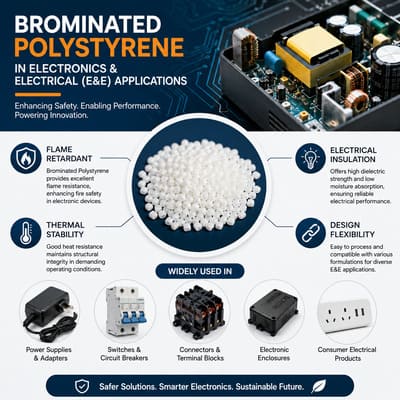
- ⚡ Electrical connectors, terminal blocks, relay and breaker housings - the heart of our electronics & E&E applications.
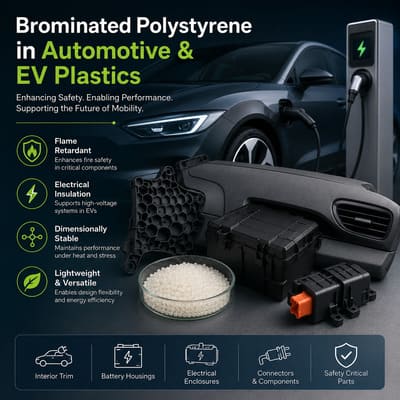
- 🔌 High-voltage EV connectors and busbar components - a fast-growing use covered in automotive & EV applications.
- 🏭 Industrial & appliance parts near heat or current where V-0 is required.
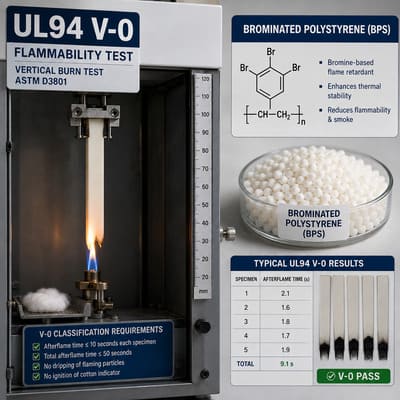
The target rating and its test methods are covered in our UL94 V-0 flammability testing guide; the glow-wire methods referenced by connector standards are published by the IEC.
❓ Frequently Asked Questions
❓ Why is BPS especially popular for PA66?
💡 Because PA66 is processed at ~280–300 °C, and BPS is one of the few flame retardants thermally stable enough to survive that window without decomposing or plating out.
❓ Is glass-reinforced nylon harder to flame-retard than unfilled nylon?
💡 Yes - the candlewick effect from exposed fibres channels flame along the part. A gas-phase system like BPS + Sb₂O₃ overcomes this, which is why it's standard for reinforced grades.
❓ Does BPS bloom on connector surfaces?
💡 No - its high-molecular-weight polymeric structure resists blooming and migration, keeping precision surfaces clean, which is essential for connectors.
❓ How does BPS compare with halogen-free nylon flame retardants?
💡 BPS is very robust to processing and reliable to V-0. Halogen-free options (e.g. metal phosphinates) offer lower smoke/acid gas but can be more sensitive to dosage and processing in highly filled nylon - it's an application-specific trade-off.
📚 Related Articles
🧱 Application
Brominated Polystyrene in PBT: Flame Retardant for Polybutylene TerephthalateThe other big connector resin - and how the glass-fibre challenge plays out there.
⚡ End Use
Brominated Polystyrene in Electronics & Electrical (E&E) ApplicationsWhere flame-retardant nylon connectors and housings end up.
📘 Start Here
Brominated Polystyrene (BPS) Flame Retardant: The Complete GuideThe hub article covering everything about BPS in one place.
💬 Formulating Flame-Retardant PA6 or PA66?
Sinolook Chemical supplies heat-stable brominated polystyrene for glass-reinforced nylon, with support on grade selection, synergist ratio and loading. Request a quote or sample. 🚀
📱 WhatsApp: 0086 18150362095
💬 WeChat / Tel: 0086 13400715622
✉️ Email: sales@sinolookchem.com
View the BPS Product Page →